
21 November 2025
Around the world, coastal agencies face the same growing challenge: rescues take too long because dangerous situations are spotted too late. Autonomous rescue systems like the AeroResQ™ Dock are transforming this reality, providing instant response, on-demand drone launches, and continuous monitoring that never blinks.
Traditional beach operations rely on elevated towers, binoculars, and human vigilance. These tools work, but only when a lifeguard sees an emergency at the perfect moment. AI-assisted systems provide a second layer of awareness, detecting risk earlier and enabling intervention before a swimmer fully submerges.
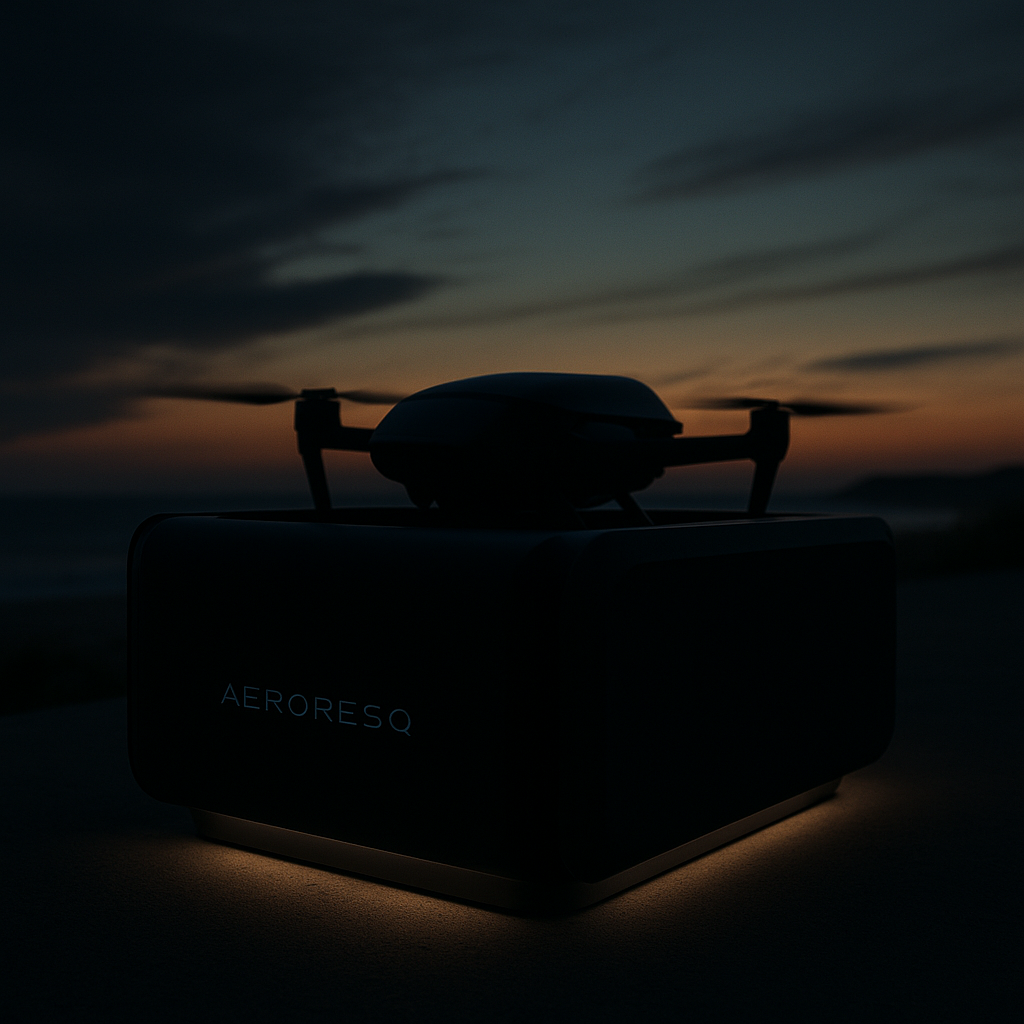
The AeroResQ™ Dock is a shoreline-mounted, weatherproof station that houses the AeroResQ™ drone. It keeps the aircraft charged, shielded from salt corrosion, and ready to deploy the moment a distress signal is confirmed. The dock also serves as a 24/7 sensor hub, continuously observing the water, classifying swimmer activity, and verifying alerts.
The AeroResQ™ Dock is designed around the principle of human-in-command automation. AI identifies risk, but lifeguards make the final call. The system only deploys when operators approve it on their tablet or smartwatch.
“Automation speeds up response time. But judgment still belongs to the lifeguard.”
Future updates to the AeroResQ™ Dock include larger battery reserves, faster automated winching systems, and multi-drone rotation for busy coastlines. Predictive ocean-drift modeling and enhanced night-vision overlays are currently in testing with early pilot partners.
Coastal rescue is entering its next chapter, one where drones, sensors, and lifeguards work together to save lives faster than ever.